
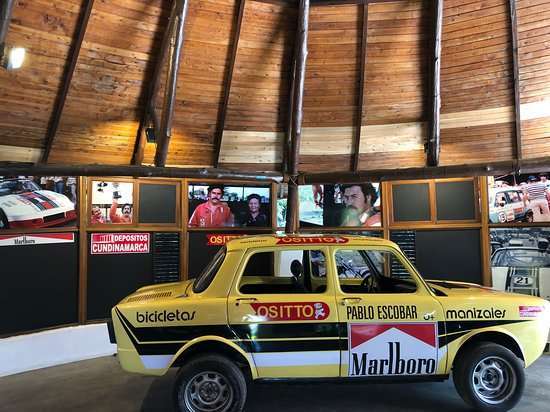
Few names in modern history carry as much weight, or as much curiosity, as Pablo Escobar. The man who led the Medellín Cartel, amassed one of the largest criminal fortunes in history and terrorized an entire nation is now, paradoxically, one of the reasons international travelers come to Colombia's second city. The Pablo Escobar tour in Medellín is one of the most visited and most debated experiences in the country, and if you are planning a trip, you probably have questions.
This guide answers them all: who Escobar was, what you will see stop by stop, the ethical debate around the tour, how to recognize a responsible operator and why booking with a licensed local agency like Medellin Group makes the difference.
Who Was Pablo Escobar?
Pablo Emilio Escobar Gaviria was born in Rionegro, Antioquia, in 1949 and was killed in Medellín in December 1993. During the 1980s and early 1990s the Medellín Cartel controlled the majority of the cocaine shipped to the United States, and Forbes listed Escobar among the world's billionaires from 1987 to 1993.
Behind the legend lies a devastating reality. Escobar's organization was responsible for thousands of murders, including presidential candidates, judges, journalists, police officers and civilians killed in bombings. In 1991, at the height of that violence, Medellín recorded more than 6,000 homicides in a single year. Ordinary families lost fathers, siblings and children, and the scars are still present three decades later.
Modern Medellín has transformed dramatically. The city that once carried the title of "murder capital of the world" is now celebrated as a model of urban innovation and resilience. Escobar's shadow remains, though, and for many visitors understanding that shadow is part of understanding the city.
What Does the Pablo Escobar Tour Include?
Our Pablo Escobar Tour is a private, guided experience of about 5 hours with round-trip transportation from your hotel. It is led by local guides who grew up in Medellín and lived the consequences of the cartel era. The tour typically covers:
- The Pablo Escobar Museum, a collection of personal belongings and photographs curated by members of the family. It is a starting point for discussing the man behind the myth and the contradictions of his legacy.
- La Catedral, the prison Escobar had built for himself in the hills above Envigado after his surrender in 1991. He escaped in 1992. Today the site is run by a religious community and includes a sports field used by local youth, with sweeping views over the Aburrá Valley.
- The Monaco Building site in El Poblado, where Escobar lived with his family. The building was car-bombed by the rival Cali Cartel on 13 January 1988 and imploded by the city on 22 February 2019. In its place stands Parque Memorial Inflexión, a memorial dedicated to the victims of narco-terrorism.
- Jardines Montesacro cemetery in Itagüí, where Pablo Escobar is buried alongside members of his family. It remains a site of curiosity for visitors and, controversially, of pilgrimage for some admirers.
- Envigado and the cartel-era neighborhoods, where Escobar built housing and football pitches to cultivate a "Robin Hood" image among the poor.
Step-by-Step Itinerary: What You'll See
Pickup and historical context
Your guide meets you at your hotel in El Poblado, Laureles or anywhere in the city. A proper Pablo Escobar tour begins with context before any stop: who Escobar was before cocaine, how the Medellín Cartel formed and what daily life in the city looked like during the 1980s. That foundation turns every stop that follows into a lesson instead of a photo opportunity.
The museum and the family's version
At the museum you see objects and photographs that the family has preserved. Your guide fills in what a family collection will not tell you: the victims, the bombings and the war against the Colombian state.
Monaco and Parque Memorial Inflexión
The site of the Monaco Building is one of the most quietly powerful stops. Where Escobar's family home once stood, the city chose to build a memorial to the people his violence killed. It is a clear statement of how Medellín wants this history to be remembered.
La Catedral and Montesacro
The drive up to La Catedral offers panoramic views of the city Escobar once held hostage. A prison built on land he chose, with comforts he paid for, says everything about the corrupted power of that era. The tour ends at the cemetery in Itagüí. Guides handle this stop with care and ask visitors to be respectful of families who may be visiting nearby graves.
Is the Pablo Escobar Tour Ethical?
This is the most important question, and there is no single answer. Medellín's citizens, especially those who lived through the 1980s and 1990s, have complicated feelings about narco-tourism. For survivors, seeing foreign tourists pose and smile at Escobar's grave is painful. At the same time, refusing to engage with this history does nothing to honor it. The difference lies in how the tour is conducted.
Arguments for attending
Tourism related to dark historical events, often called "dark tourism", has a long and serious tradition. Sites like Auschwitz, Ground Zero and Hiroshima draw millions of visitors because bearing witness to tragedy is how societies remember, learn and prevent repetition. Understanding Escobar in the context of Colombian history, international drug policy and inequality is a legitimate educational pursuit.
Many Medellín guides grew up in neighborhoods where cartel violence was a daily reality. Hearing their personal accounts is humbling, nuanced and far removed from the glorification seen in TV series.
Arguments for caution
Some operators exploit the Escobar mythology for pure entertainment, selling "narco" experiences that trivialize real victims. Posing with fake rifles or Escobar costumes in front of his former properties is deeply offensive to Colombian families who lost loved ones.
Escobar's son, Sebastián Marroquín, and organizations representing victims have repeatedly called for responsible, victim-centered storytelling instead of glorification.
What a responsible Pablo Escobar tour looks like
- The guide frames Escobar as a criminal and a terrorist, not a folk hero
- The tour includes the perspective of victims and of the city's recovery
- The operator employs local guides from Medellín
- Photography at sensitive sites, particularly the grave, is handled with discretion
- Revenue stays in the local economy
Our approach
At Medellin Group, the Pablo Escobar tour is explicitly educational. Our guides share the full picture: the political climate that allowed the cartel to thrive, the human cost of narco-terrorism and, crucially, how Medellín rebuilt itself into the city you see today. We do not sell costumes, we do not glorify violence and we always include the voices of those affected.
Practical Information
Duration and price
The tour lasts about 5 hours, including hotel pickup and drop-off. It runs as a private tour, so the pace adapts to your group and your questions. Check current prices and availability on the Pablo Escobar Tour page.
What to bring
- Comfortable walking shoes
- Sunscreen and a light jacket (Medellín's weather can shift quickly, and La Catedral is cooler)
- Water bottle
- Camera, following your guide's advice on respectful photography at sensitive sites
- Your passport or ID
Safety
All sites on this tour are in accessible areas visited by thousands of travelers every year, and Medellín's homicide rate has fallen by more than 90% since the early 1990s. Our drivers use well-maintained vehicles and our guides carry emergency contacts. For more peace of mind, read our Medellín safety guide for tourists.
Getting to your tour
If you are arriving at José María Córdova International Airport, book an airport transfer first. Our private transfer service drops you at your hotel in El Poblado, Laureles or anywhere in the city, with English-speaking drivers. From there you can join the tour without worrying about taxis or apps.
Pablo Escobar Tour vs. Medellín City Tour: Which Should You Book?
| Factor | Pablo Escobar Tour | Medellín City Tour |
|---|---|---|
| Focus | 1980s and 1990s cartel history | Culture, architecture, transformation |
| Best for | History lovers, viewers of the TV series | First-time visitors, families |
| Emotional tone | Reflective, heavy | Uplifting, energizing |
| Can you combine them? | Yes, many visitors do both over two days | |
Tips for Booking a Pablo Escobar Tour in Medellín
- Book private when possible. A private guide adapts the pace, answers more questions and offers a richer experience than a shared van.
- Read reviews carefully. Look for guides praised for historical accuracy and sensitivity, not showmanship.
- Combine it with other tours. The Graffiti Tour in Comuna 13 pairs especially well, since both tell the story of Medellín's violent past and its transformation. For contrast, the El Castillo Museum shows the old Antioqueño aristocracy.
- Ask your hotel or our team. If you are staying at one of our partner hotels in Medellín, our team can arrange the tour directly.
- Go early. Mornings are cooler and the cemetery is quieter before noon.
How to Book
- Visit our Pablo Escobar Tour page to check availability and prices.
- Add the tour to your cart and select your preferred date and time.
- Complete checkout securely with a credit card (Visa, Mastercard, Amex), Zelle or bank transfer.
- Receive a confirmation email with your guide's contact information and pickup details.
Beyond Escobar: A Fuller Picture of Medellín
The Pablo Escobar tour is a starting point. The city has far more to offer than its darkest chapter:
- The Medellín City Tour covers the transformation: the Metrocable lines that connected hillside neighborhoods, the library parks, Parque Explora and Plaza Botero.
- Guatapé, a colorful lakeside town about two hours from Medellín, famous for its painted facades and the El Peñol rock.
- Coffee Tour, a visit to a working finca in the mountains to learn how Colombian coffee is grown, processed and brewed.
If you plan to stay several nights, our team can build a full itinerary. Browse hotels in Medellín or our vacation rentals in El Poblado and Laureles for longer stays.
Frequently Asked Questions
Is the Pablo Escobar tour safe?
Yes. The sites visited are in safe, accessible areas of Medellín and you travel in a private vehicle with your guide. The city welcomes well over a million international visitors a year. See our Colombia tourism statistics for the full data.
Is the tour appropriate for children?
The tour discusses violence, drug trafficking and political corruption. We recommend it for ages 14 and above, and suggest parents read the tour description before booking with younger teens.
Can I take photos at the cemetery?
Yes, photography is allowed. Your guide will advise on respectful behavior, particularly near other families' graves.
Is it disrespectful to take this tour?
With the right operator, no. Learning history, even dark history, is not disrespectful. What is disrespectful is trivializing victims, glorifying the criminal or treating a memorial as a photo prop. Choose your guide carefully.
Do I need to speak Spanish?
No. The tour is guided in English, and Spanish is available too. Just tell us your preference when booking or through our contact page.
Does the tour visit Hacienda Nápoles?
No. Hacienda Nápoles, Escobar's former ranch in Puerto Triunfo, is now a theme park about 170 km from Medellín, roughly 4 hours each way by road. It works best as a separate trip with an overnight stay in the Magdalena Medio region. Contact us to arrange a private transfer.
How is Medellin Group different from other tour operators?
We are a licensed travel agency (RNT 169523) operating in Medellín since 1996. Our guides are vetted, bilingual professionals who specialize in responsible, historically grounded storytelling. We never glorify violence or sell "narco" novelties.
Final Thoughts
The Pablo Escobar tour is one of the most emotionally complex experiences you can have in Colombia. Done right, with honest guides, respectful framing and a commitment to victims' voices, it is also one of the most enlightening. It shows how poverty, inequality, drug demand abroad and political failure combined to create a monster, and how a generation of Colombians refused to be defined by him.
Medellín today is a city of extraordinary energy, creativity and pride. The best way to honor its recovery is to understand what it recovered from, and that is exactly what this tour offers.
Ready to explore? Book your Pablo Escobar Tour here or contact our team to plan a full Medellín itinerary.


